
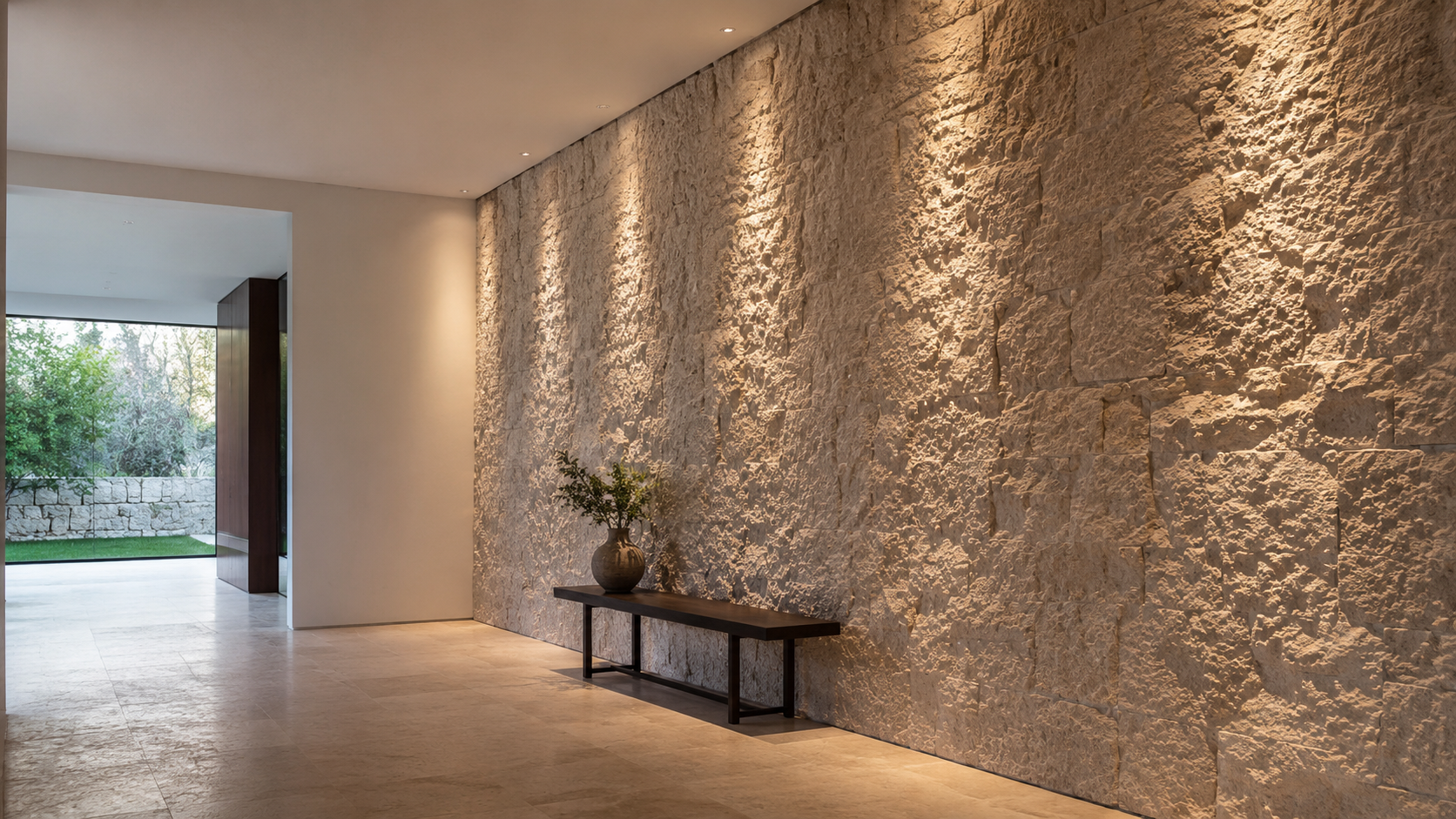
Wall grazing is an architectural lighting technique that positions light close to a surface so it travels across the material at a shallow angle. This creates small highlights and shadows that reveal texture, depth and craftsmanship more strongly than broad frontal illumination. The technique works particularly well with rough stone, brick, textured plaster, concrete, timber …
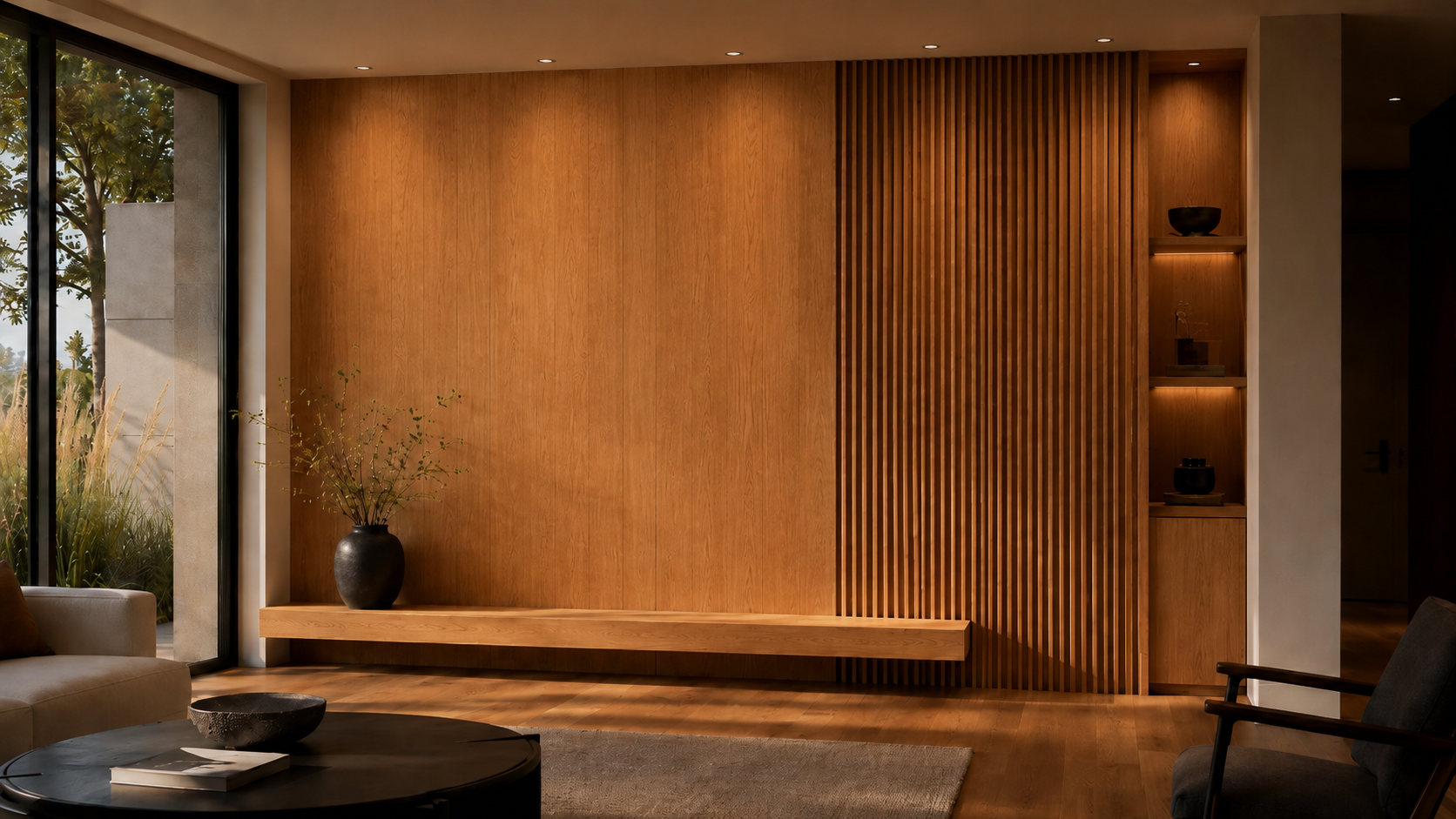
Lighting timber and wood finishes is about revealing grain, colour and craftsmanship without making the material appear flat, overly yellow or unnecessarily dramatic. The direction of the light is especially important because timber has a natural visual grain that responds differently when illuminated from above, across the surface or directly from the front. Smooth oak …
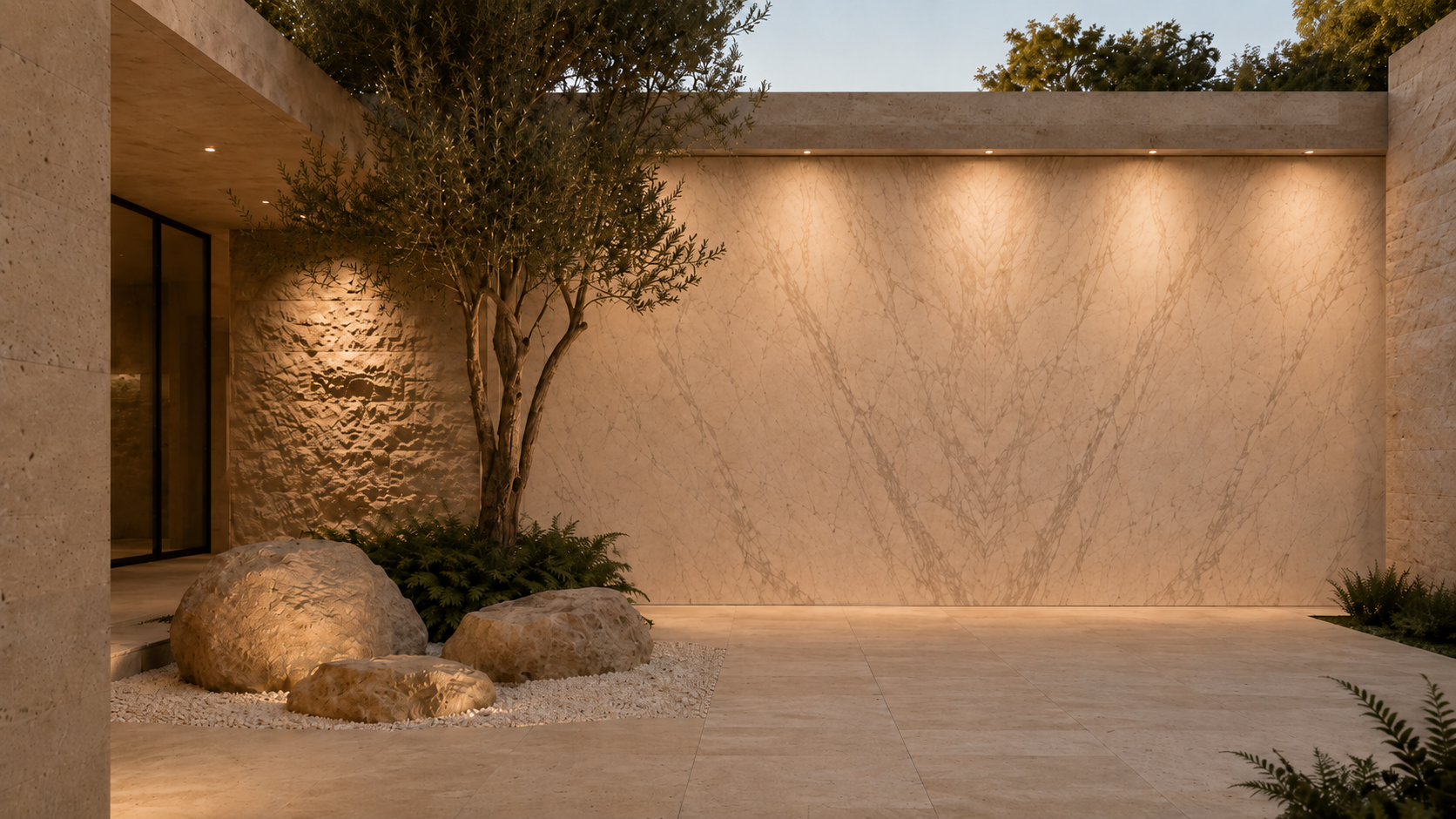
Lighting natural stone is about far more than making a surface brighter. Whether you’re illuminating limestone, marble, granite, slate or travertine, the way light interacts with the stone determines how its texture, colour, veining and natural character are perceived. A thoughtfully designed lighting scheme reveals the unique qualities of the material, while poor lighting can …