

Understanding Cool White and Daylight Lighting When selecting lighting for workspaces, kitchens, garages, and commercial environments, two common colour temperatures often appear: 4000K and 5000K. Both fall into the cooler end of the lighting spectrum and are designed to provide clear, bright illumination. Although the numerical difference seems small, these colour temperatures create noticeably different …
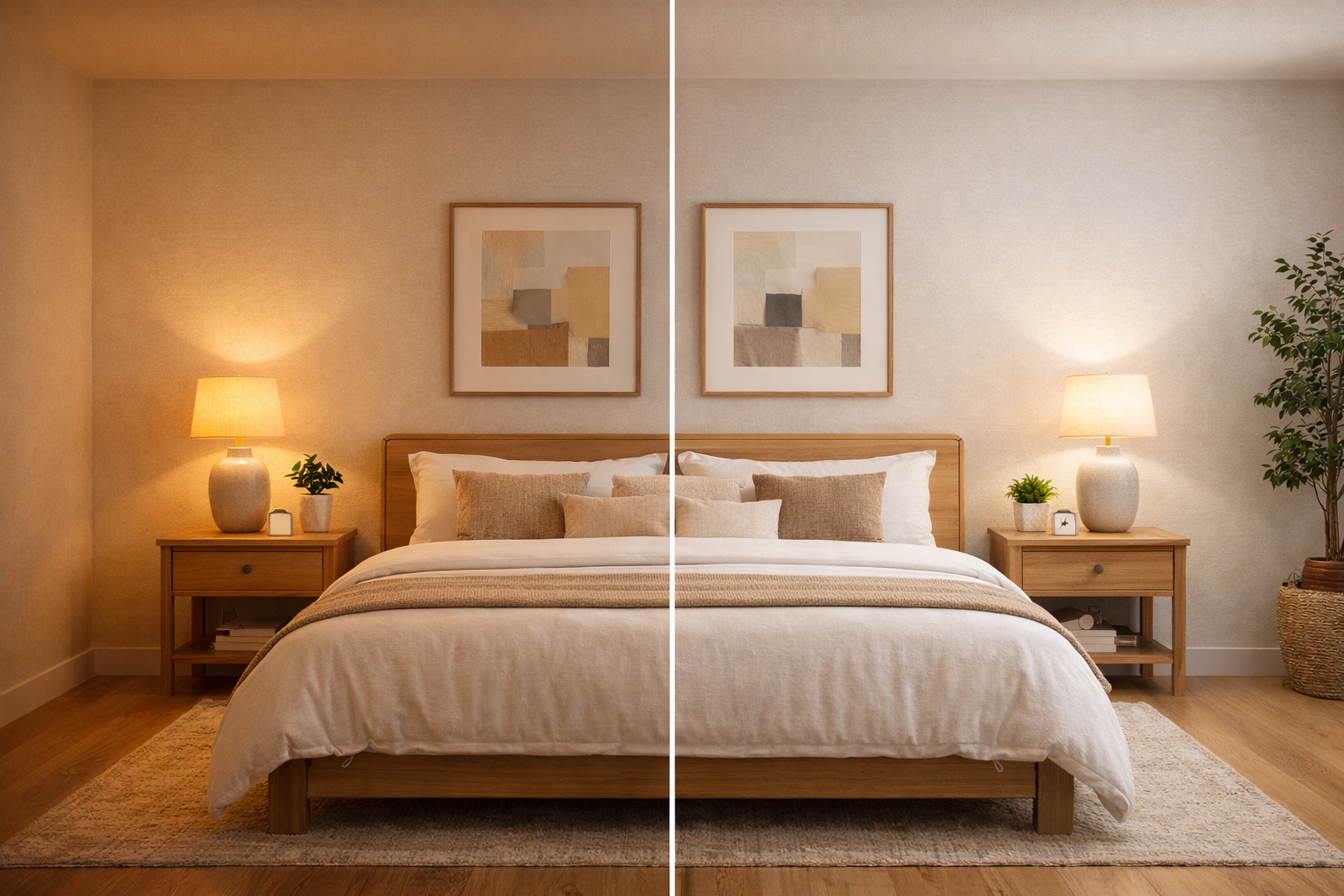
2700K and 3000K are the two most common warm white lighting temperatures used in homes. While both create a comfortable and inviting atmosphere, the subtle difference between them can noticeably affect how a room feels, how colours appear, and how bright the space looks. Understanding when to choose 2700K or 3000K lighting helps ensure the …
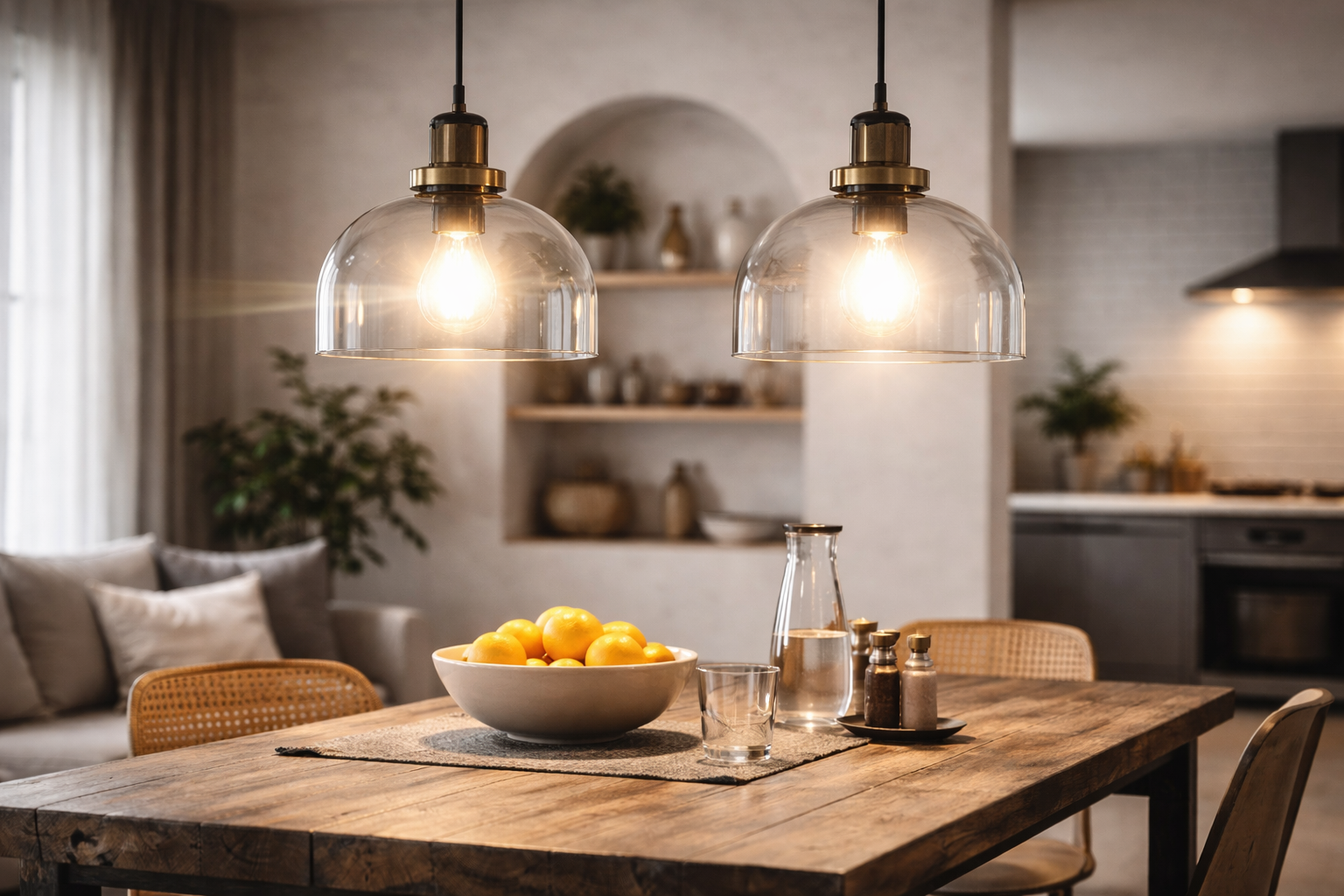
Glare is one of the most common lighting complaints — and one of the most misunderstood. Many people assume glare is caused by a light being “too bright”, when in reality it is usually the result of how light is delivered, positioned, and controlled. Pendant lights are especially prone to glare because they sit directly …

How Colour Temperature Shapes Mood, Design and Function Colour temperature, measured in Kelvin (K), describes the visual warmth or coolness of a light source. A low Kelvin value, such as 2700K, emits a warm golden light similar to candlelight, while a high value, like 5000K or above, produces a cooler, daylight-like glow. Understanding this scale …